In the previous post, we constructed the universe by placing particles into the vacuum one at a time, building a homogeneous expanding state from simple ingredients.
Our universe, in its infancy, when it was a dense soup of particles, appears to have been highly homogeneous. However, producing a state of a vast number of particles with perfect uniformity is extraordinarily difficult. In fact, the evidence shows that tiny deviations from perfect homogeneity must have been present at some stage.
In gravitational systems, such perturbations tend to grow.
To see how structure emerges, consider a nearly homogeneous distribution of particles. Each particle carries its gravitational field and interacts with all the others.
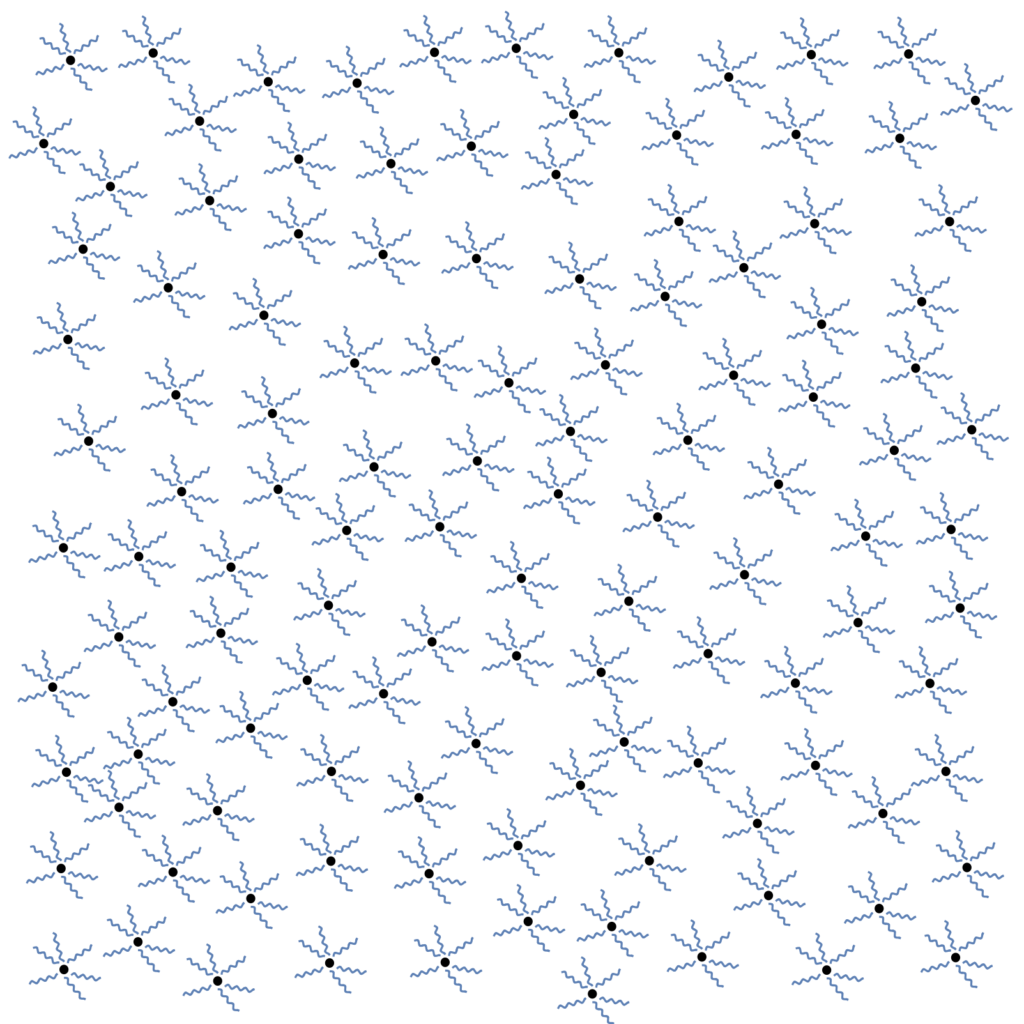
Now imagine that in some region the particles are just slightly more concentrated than average. The difference may be tiny, but gravity does not ignore it.
Where the density is higher, the gravitational pull is stronger. This pulls in additional particles, increasing the density further. The effect reinforces itself, and the initially small deviation grows over time.
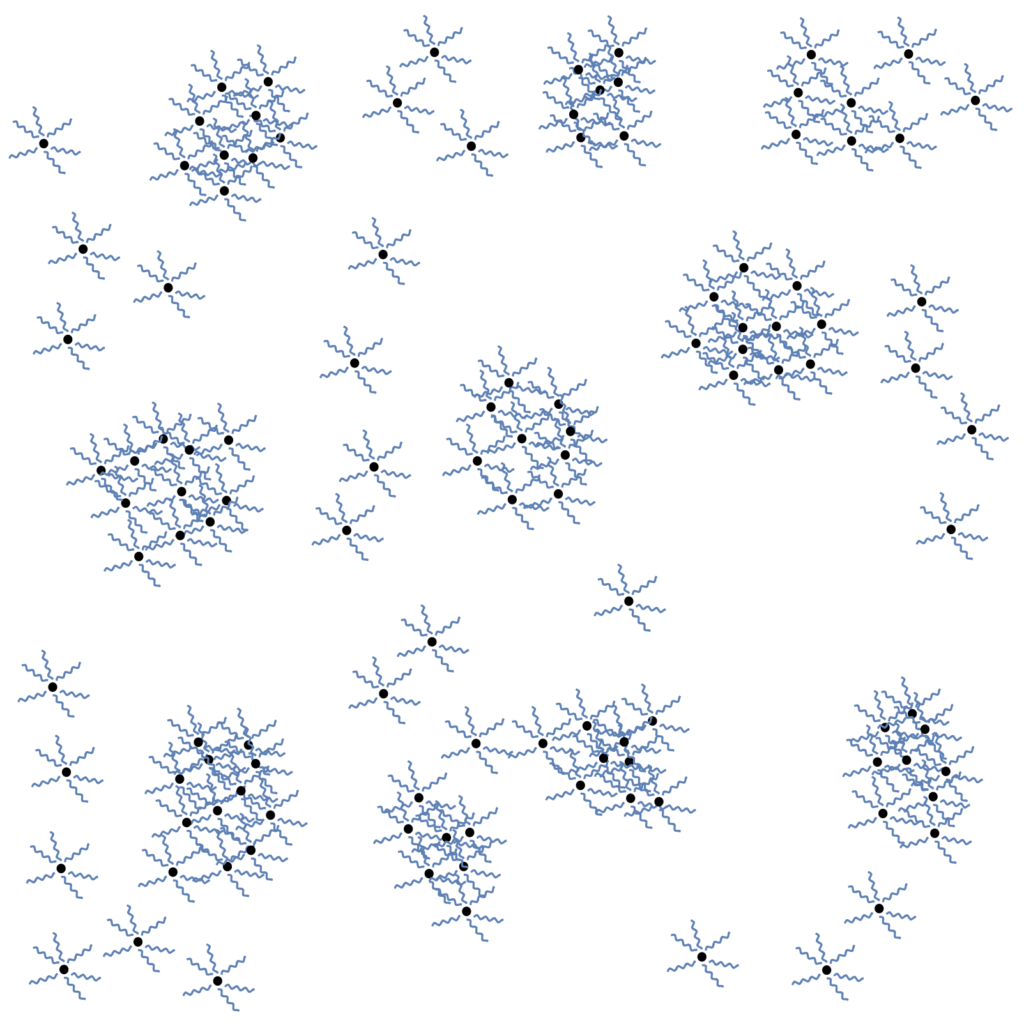
Even while the universe as a whole expands, these local regions evolve differently.
Instead of continuing to move apart, they begin to contract under their own gravity. Matter flows inward, forming denser substructures that gradually decouple from the overall expansion.
The detailed evolution of these structures is highly nonlinear. Different regions evolve at different rates, and the outcome depends on the properties of the particles involved.
This is how the structures we observe today arise — galaxies, clusters, and the large-scale distribution of matter in the universe.
See also:
What is the quantum structure of the universe?
What does it mean that the universe is expanding?